
Comprehensive testing

50+ biomarkers and a DEXA scan. Quarterly.

Most women come to us after their PCP ran a basic panel and told them everything was normal. The labs they ran weren't comprehensive enough to show what's actually shifted. This is the panel Dr. Rihal uses to determine whether HRT, thyroid optimization, metabolic intervention, or another protocol is the right call.

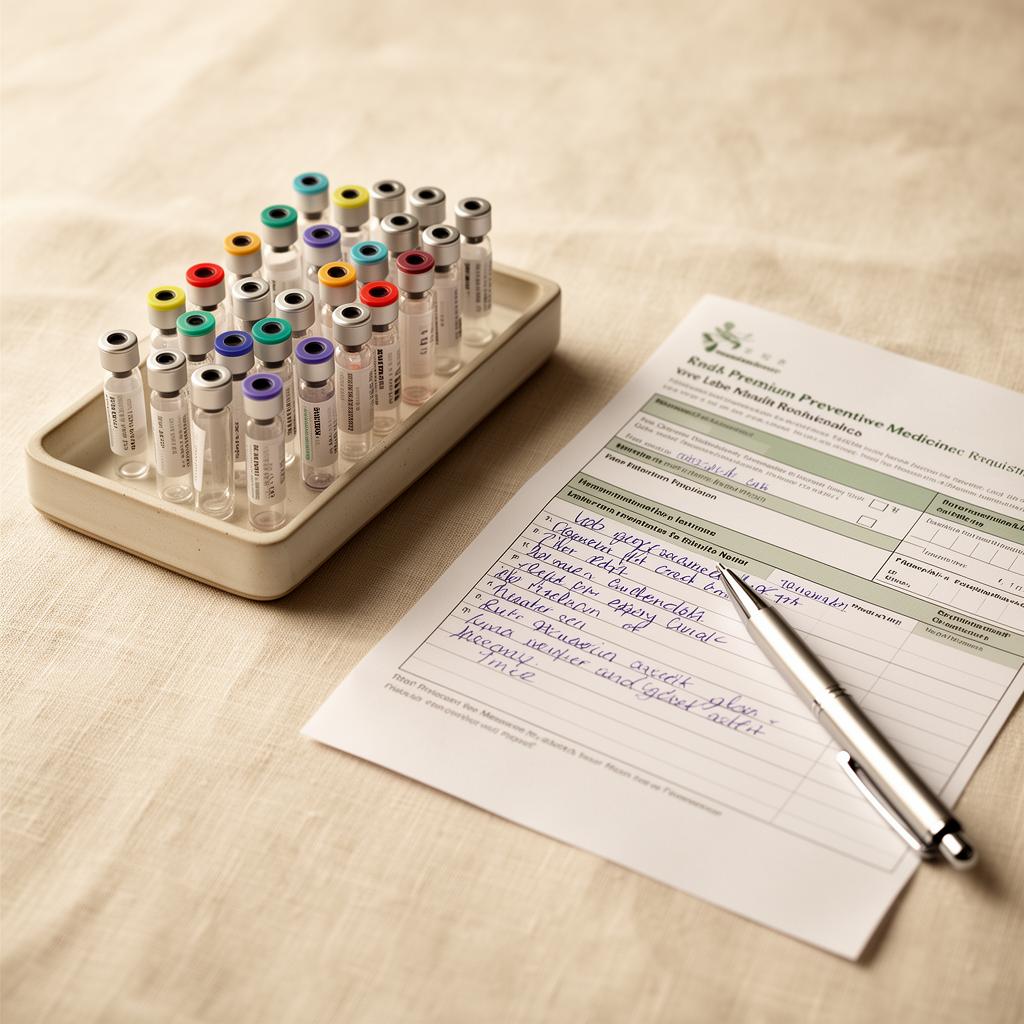
A tray of blood collection vials beside a lab requisition sheet with handwritten notes

Body composition

DEXA scan

A quarterly DEXA scan (up to 4× per year) gives us a precise picture of your body composition — lean mass, fat mass, and bone density. Bone density is particularly important for women in midlife because estrogen decline accelerates bone loss; tracking it quarterly tells us whether HRT is doing its job protecting your skeleton.

If your DEXA reveals bone density issues, you'll consult with Lenita Anthony, our exercise physiologist, on a strength and weight-bearing protocol designed to rebuild density alongside the medical plan Dr. Rihal develops.

Hormones

Full hormone panel

  • Estradiol
  • Progesterone
  • Testosterone (total and free)
  • DHEA-S
  • SHBG
  • FSH and LH (where clinically indicated)
  • Prolactin (where clinically indicated)
  • Cortisol (where clinically indicated)

Thyroid

Full thyroid panel

  • TSH
  • Free T3
  • Free T4
  • Reverse T3
  • Thyroid antibodies (TPO, TgAb)

Metabolic

Metabolic and cardiovascular markers

  • Fasting insulin
  • Fasting glucose
  • HbA1c
  • Comprehensive lipid panel
  • ApoB
  • Lipoprotein(a) where indicated

Inflammation

Inflammation markers

  • High-sensitivity CRP (hs-CRP)
  • Homocysteine
  • Ferritin (also a nutrient marker)

Nutrient status

Nutrient status

  • Vitamin D (25-OH)
  • Vitamin B12
  • Folate
  • Iron and ferritin
  • Magnesium (where indicated)

Liver and kidney

Liver and kidney function

  • Complete metabolic panel
  • ALT, AST, alkaline phosphatase
  • BUN, creatinine, eGFR

Why we test what we test

The picture is connected, so the panel is too.

Hormone optimization isn't about prescribing estrogen and seeing what happens. The hormonal picture interacts with thyroid function, metabolic health, inflammation, and nutrient status — and what looks like a hormone issue is sometimes thyroid, sometimes metabolic, sometimes a deficiency. The point of running a comprehensive panel is to determine the actual driver of your symptoms, not to default to a standard prescription.

Find out what your labs actually show.